If you’ve been searching “how to get better at NYT Connections”, chances are you’re stuck in the same loop most players fall into.
You see a pattern. You click quickly. And… it’s wrong.
That’s frustrating. But it’s not random.
👉 The game is designed that way.
NYT Connections isn’t about knowing more words. It’s about thinking differently under pressure.
What NYT Connections Is Really Testing
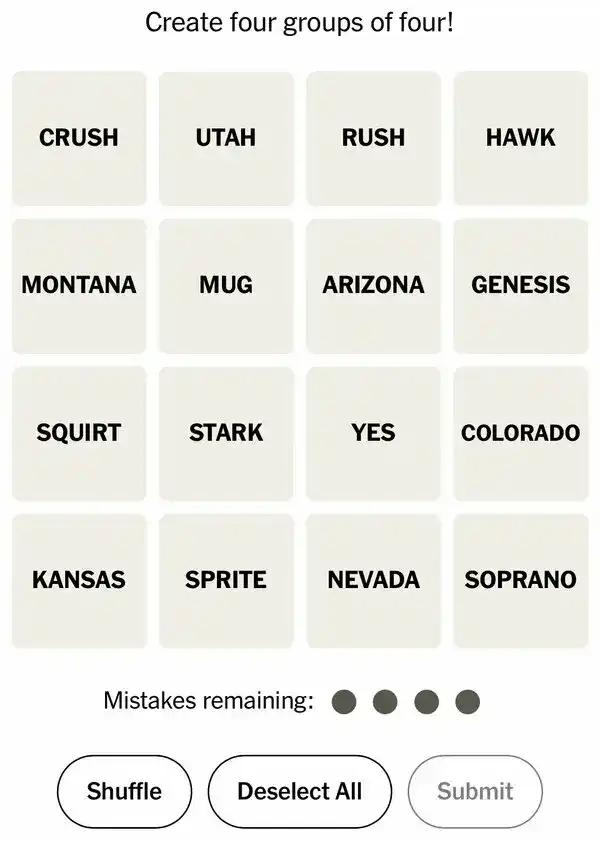
nyt connections puzzle example
At first glance, the puzzle is simple:
16 words
4 groups
1 shared connection per group
But under the surface, it’s testing three key skills:
pattern recognition (seeing hidden relationships)
cognitive flexibility (shifting between ideas)
decision control (resisting wrong choices)
This is why searches like “NYT Connections strategy” and “NYT Connections tips” keep growing.
Because people realize:
👉 This isn’t just a game. It’s mental training.
The Real Reason You’re Not Improving
Here’s the uncomfortable truth.
You’re not bad at the game.
You’re just:
moving too fast
trusting obvious patterns
ignoring better alternatives
👉 And the puzzle is built to exploit exactly that.
How to Get Better at NYT Connections (Proven Strategy)
This is where most guides stay shallow. Let’s go deeper — into what actually works.
1. Stop Clicking So Fast
If you instantly see a connection, pause.
Seriously.
👉 The most obvious group is often a trap.
Take 10–15 seconds to scan all 16 words first. Let your brain “map” possibilities before acting.
2. Look for One Perfect Group
Not a “pretty good” group.
A perfect one.
That means:
all 4 words clearly belong together
no second interpretation
no hesitation
If you feel even slight doubt, don’t click yet.
3. Use Elimination to Your Advantage
Once you lock in one correct group:
mentally remove those words
re-evaluate the remaining set
This dramatically increases accuracy.
👉 Many experienced players rely on this more than intuition.
4. Assume You’re Being Tricked
Because you are.
Common traps include:
words with multiple meanings
overlapping categories
fake synonym groups
👉 If something feels too obvious, double-check it.
5. Leave the Hardest Group for Last
The final group (often purple) is usually:
abstract
indirect
concept-based
This isn’t bad luck — it’s intentional design.
Common Mistakes in NYT Connections (And How to Avoid Them)
If you’ve searched “why am I bad at NYT Connections”, this is likely why.
Mistake 1: Acting on First Instinct
Fast thinking leads to fast mistakes.
✔ Fix: wait until you see all 4 words clearly connected.
Mistake 2: Falling for Surface Similarities
Words may look related but belong to different groups.
✔ Fix: ask “Is this the only possible connection?”
Mistake 3: Ignoring Multiple Meanings
Many words are intentionally ambiguous.
✔ Fix: think of alternative meanings before grouping.
Example Walkthrough (How a Pro Thinks)
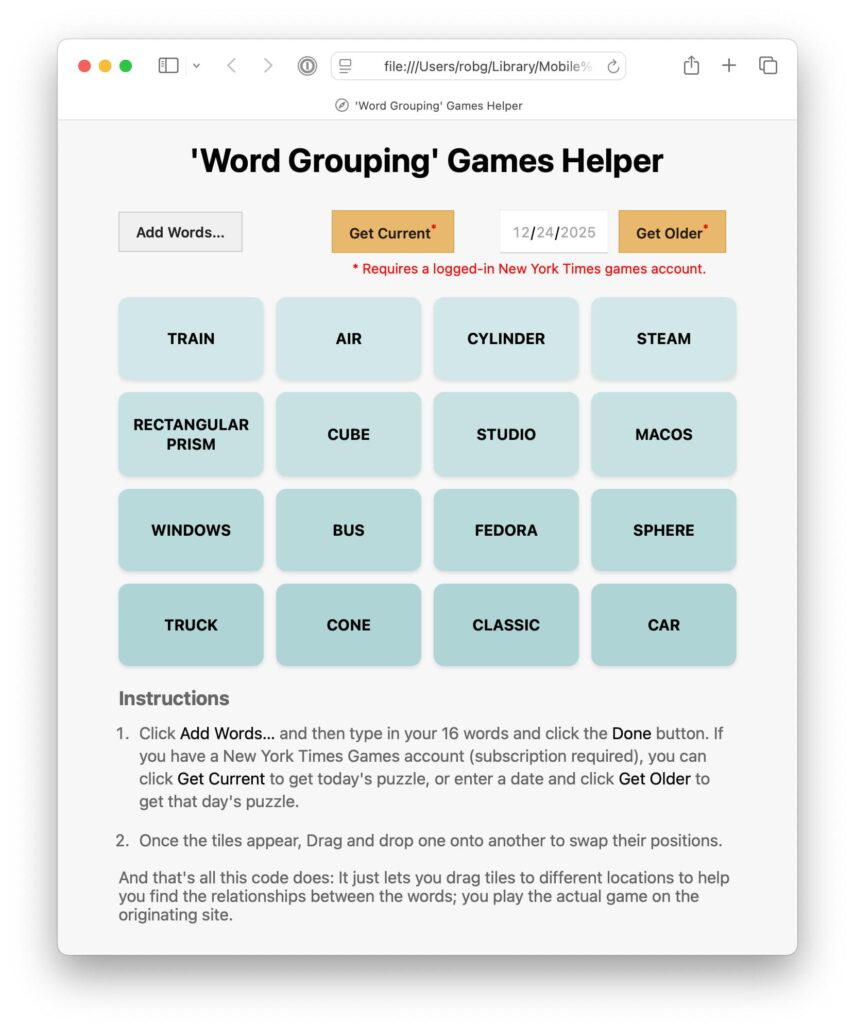
how to solve nyt connections step by step
how to solve nyt connections step by step
Let’s simplify the thinking process.
Imagine these words:
Apple, Banana, Orange, Table
Chair, Desk, Sofa, Bed
Red, Blue, Green, Yellow
Run, Jump, Swim, Read
Step 1: Spot the cleanest group
Colors → Red, Blue, Green, Yellow
Step 2: Remove and reassess
Now fewer distractions.
Step 3: Confirm before clicking
Don’t guess — verify.
👉 The difference is simple:
Beginners guess. Experts confirm.
Why NYT Connections Became So Popular
Searches for “NYT Connections today” and “NYT Connections answers” have exploded.
Why?
It builds on Wordle’s success
It’s easy to start, hard to master
It creates a daily habit
But more importantly:
👉 It feels like productive entertainment
Brain Training Benefits (What You Actually Gain)
This isn’t just a game you play and forget.
Regularly solving puzzles like this improves:
pattern recognition skills
cognitive flexibility
problem-solving ability
mental clarity
That’s why queries like “brain training puzzle benefits” keep rising.
Skills You Build (Beyond the Puzzle)
Consistent practice develops:
critical thinking
faster decision-making
better focus
clearer thinking
👉 These translate directly into real-world productivity.
A Simple 5-Minute Practice Routine
If you want to improve faster, do this:
Solve one puzzle
Review your mistakes
identify the trap
replay the logic
👉 This is how you train pattern recognition, not just play.
NYT Connections vs Wordle
Many users compare the two.
Here’s the key difference:
Wordle → guessing + vocabulary
Connections → logic + relationships
👉 Connections requires deeper thinking.
FAQ (Quick Answers)
What is the hardest group in NYT Connections?
Usually the last one. It involves abstract or less obvious connections.
Is NYT Connections good for brain training?
Yes. It improves cognitive flexibility and pattern recognition.
How long does it take to get better?
Most players improve noticeably within 1–2 weeks.
Is there a faster way to solve it?
Yes. Focus on certainty, not speed.
Final Takeaway
If you want to get better at NYT Connections, don’t try to move faster.
👉 Learn to think more clearly.
That’s what separates casual players from consistent solvers.
PUZZLE STRATEGY & PATTERN THINKING
Recommended Reading
Explore more articles about pattern recognition, decision-making, focus improvement, cognitive flexibility, and mental strategies that improve NYT Connections performance.




Dear Sir/Madam
Feature solveyourday.com in GoogleSearchIndex to be displayed in web search results!
Insert solveyourday.com now: https://searchregister.info