Introduction
You sit down with the intention to focus.
You open your laptop, maybe make a quick plan, and tell yourself this time will be different.
But within a few minutes, your attention drifts.
You check your phone without thinking.
You open another tab.
You reread the same sentence more than once.
Time passes, but nothing really gets done.
If this keeps happening, it can feel frustrating. You might even start to question your discipline.
But here’s something important to understand.
Struggling to focus is not a personal failure.
It’s often a combination of how your brain works, your environment, and the way your tasks are structured.
Why It’s So Hard to Focus Today
1. Your brain is constantly overloaded
Modern life is filled with input.
Messages, notifications, videos, and endless information streams are always available.
Even when you are not actively engaging with them, your brain is aware of them.
Research from the University of California, Irvine shows that it can take more than 20 minutes to fully regain focus after a distraction.
If interruptions happen frequently, deep focus becomes almost impossible.
2. You don’t have a clear starting point
Many people struggle to begin because the task is too vague.
A thought like “I need to work” does not give your brain direction.
But a specific action like “write the first paragraph” feels manageable.
Clear tasks reduce hesitation.
Vague tasks increase resistance.
3. Your energy level is low
Focus depends heavily on mental energy.
If you are tired, stressed, or overwhelmed, your brain naturally avoids effort.
This is why scrolling on your phone feels easy, while working feels difficult.
Energy comes before productivity.
4. Your environment is full of small distractions
Distractions are not always obvious.
A phone on your desk, background noise, or multiple browser tabs can quietly pull your attention away.
Even small interruptions can break your concentration and make it harder to return to your task.
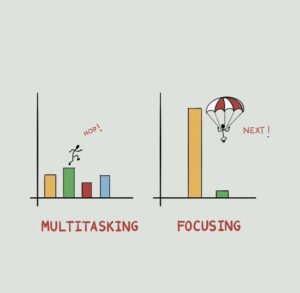
5. You are trying to do too much at once
Multitasking feels productive, but it reduces efficiency.
Each time you switch between tasks, your brain loses focus and has to readjust.
Over time, this creates mental fatigue.
6. You feel pressure to perform
When you tell yourself that you must focus perfectly, it creates tension.
That pressure can make starting feel harder.
Instead of helping, it often leads to avoidance.
7. You rely on motivation instead of structure
Motivation is inconsistent.
Some days you feel ready to work, and other days you don’t.
If your system depends on motivation, your focus will always fluctuate.
Structure creates consistency.

A Real-Life Example
Imagine you sit down to work in the evening.
You open your laptop and begin a task.
Then your phone lights up.
You check one notification, then another.
A few minutes later, you realize you’ve been scrolling.
You return to your work, but now your mind feels scattered.
You try to continue, but your focus is gone.
This cycle repeats throughout the hour.
At the end, you feel tired, but not productive.
This is not because you lack discipline.
It is because your focus was interrupted too often.
What Actually Helps You Focus
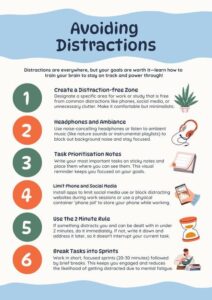
Start smaller than you expect
Instead of planning long sessions, begin with a short commitment.
Tell yourself you will work for five minutes.
This removes the pressure of starting.
Once you begin, it is easier to continue.
Clear your thoughts before starting
Take a minute to write down everything on your mind.
Tasks, concerns, ideas, or anything distracting you.
This reduces mental clutter and helps you concentrate on one thing.
Simplify your environment
You do not need a perfect workspace.
Just remove the most obvious distractions.
Place your phone out of reach.
Close unnecessary tabs.
Keep your desk as simple as possible.
These small adjustments make a noticeable difference.
Use short, focused work blocks
Long sessions can feel overwhelming.
Instead, work in shorter intervals.
For example, focus for 15 minutes, then take a short break.
This approach helps maintain energy and consistency.
Accept that focus will not be perfect
You will not feel fully focused every time.
That is normal.
Waiting for perfect conditions often leads to inaction.
Progress comes from continuing, even when it feels imperfect.
When You Feel Completely Stuck
Some days, focusing feels almost impossible.
In those moments, forcing yourself to continue is not always effective.
Instead, reset your state.
Stand up and move for a few minutes.
Step outside or change your environment.
Drink water and take a short break.
Then return and start with a small task.
A Different Way to Think About Focus
Focus is not something you force through willpower.
It is something that naturally improves when the right conditions are in place.
When your mind is clear, your task is simple, and your environment is supportive, focusing becomes easier.
Instead of trying harder, try adjusting your conditions.
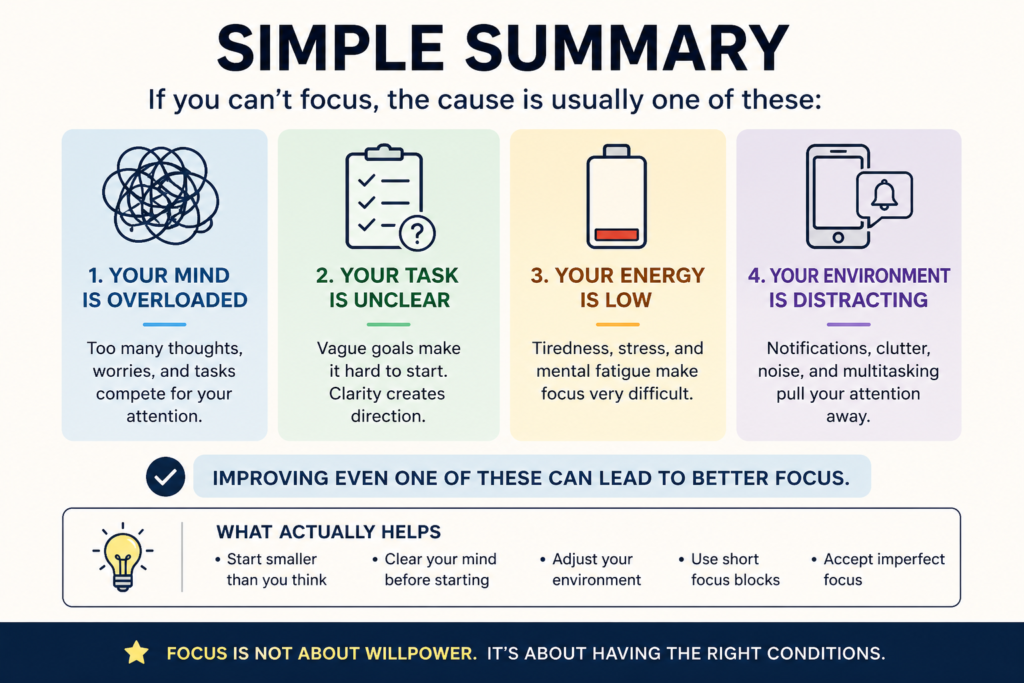
Simple Summary
If you cannot focus, the cause is usually one of these:
Your mind is overloaded
Your task is unclear
Your energy is low
Your environment is distracting
Improving even one of these can lead to better focus.
Final Thoughts
You are not alone in struggling with focus.
In today’s environment, distraction is the default.
The goal is not to eliminate distraction completely.
It is to make focusing easier.
Start small.
Reduce what interrupts you.
Keep your tasks clear and simple.
Over time, focus becomes more natural.
Recommended Reading
Explore more articles about concentration, dopamine overload, procrastination, productivity psychology, and proven ways to regain mental focus.
How to Stay Focused at Home
Simple techniques to reduce distractions and improve concentration in daily life and remote work.
Productivity10 Daily Productivity Tips That Work
Daily habits and productivity systems that help improve attention span and mental energy.
ActionHow to Stop Procrastinating and Start Working
Understand why procrastination happens and how to overcome mental resistance effectively.
HabitsHow to Organize Your Life Without Motivation
Build reliable systems and routines that continue working even when motivation disappears.
External References
- American Psychological Association — Research and psychological insights about attention, focus problems, and cognitive overload.
- Sleep Foundation — Expert-backed information about sleep quality, brain performance, and concentration issues.
- Deep Work by Cal Newport — A widely recommended framework for improving deep concentration and reducing distractions.
- James Clear: Habit Formation — Practical strategies for building better routines, focus habits, and long-term consistency.
You May Also Like