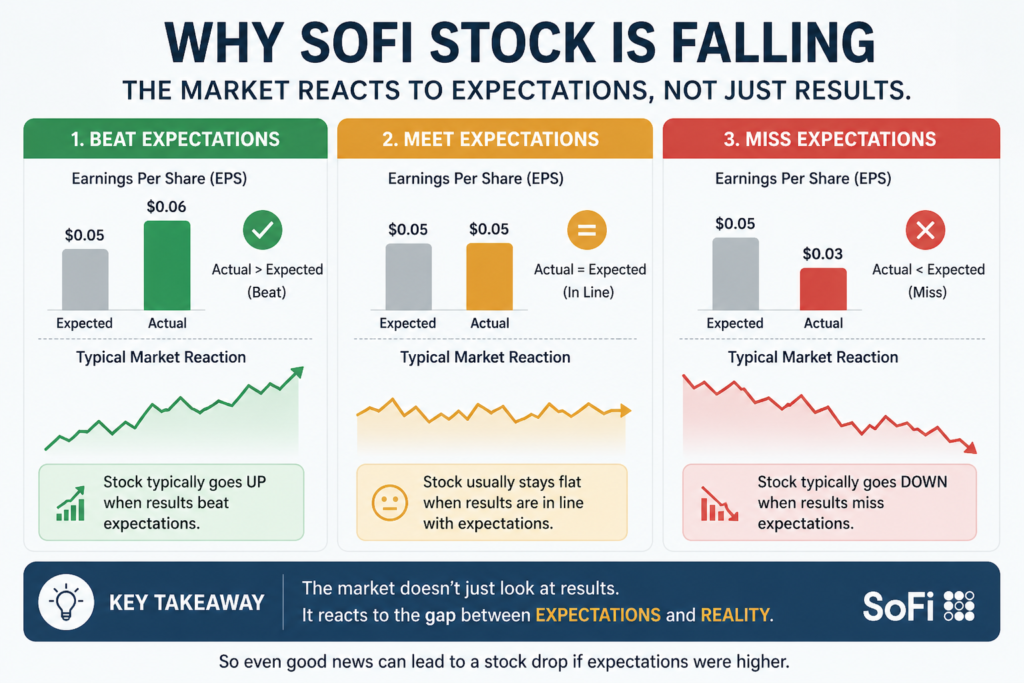
Stocks move based on expectations, not just results. Even strong earnings can lead to a drop if expectations were higher.
If you’ve searched “SoFi stock” or “why SoFi stock is falling”, you’re seeing something that confuses a lot of investors.
On paper, SoFi looks strong:
user growth is up
lending volume is increasing
revenue continues to expand
And yet, the stock drops.
This isn’t a contradiction. 👉 It’s how markets actually work.
The Market Doesn’t React to Results — It Reacts to Expectations
Most beginners think stocks move based on results.
They don’t.
👉 Stocks move based on the gap between expectations and reality.
In SoFi’s case:
expectations were already high
growth was strong, but not surprising
forward guidance didn’t exceed what investors hoped
So the reaction becomes simple:
👉 “Good, but not good enough” → selling pressure
This pattern shows up across the market, not just in SoFi stock.
A Pattern You’ve Seen Before (Even If You Didn’t Notice)
This isn’t unique.
The same thing has happened with:
Tesla after delivery reports
Netflix after subscriber updates
Meta after earnings beats
In each case:
👉 strong numbers 👉 negative stock reaction
Because the market had already priced in the good news.
The Real Driver: Investor Psychology
This is where things get interesting.
Searches like “why SoFi stock is falling” aren’t just about finance.
👉 They’re about confusion.
And that confusion comes from how humans process information.
1. Loss Aversion
People react more strongly to losses than gains.
Even a small downside surprise can trigger outsized selling.
2. Herd Behavior
When the stock starts falling, more people follow.
Not because they understand — but because they don’t want to be last.
3. Expectation Bias
Investors don’t judge results objectively.
They compare outcomes to what they expected to happen.
👉 If expectations were unrealistic, even good news feels disappointing.
Why Even Smart Investors Get This Wrong
This is not a beginner problem.
In many cases, experienced investors struggle more.
Why?
Because they:
overanalyze short-term data
build strong narratives too quickly
assume the market will behave logically
But markets are not purely logical.
👉 They are emotional systems reacting to information.
What Most Articles Miss About SoFi Stock
Most coverage focuses on:
earnings numbers
forecasts
analyst ratings
That’s useful — but incomplete.
What actually matters is:
👉 how those numbers compare to expectations
Without that context, the movement looks irrational.
With it, the move becomes predictable.
A Better Way to Understand Stock Moves
Instead of asking:
“Why did SoFi stock drop?”
Ask:
👉 “What did the market expect — and how did reality differ?”
That single shift explains most price movements.
Practical Takeaways (That Actually Help)
If you’re following SoFi stock or any growth stock, this matters.
✔ 1. Stop reacting to headlines
Headlines summarize. They don’t explain.
✔ 2. Look at expectations, not just results
Always ask:
👉 Was this already priced in?
✔ 3. Slow down your decisions
Fast reactions are usually emotional reactions.
And emotional reactions are rarely profitable.
Why This Keeps Happening
Because the cycle never changes:
expectations rise
news is released
reality is compared
emotion drives reaction
👉 repeat
This Isn’t Just About SoFi
The real lesson isn’t about one stock.
It’s about how decisions are made under uncertainty.
The same patterns show up in:
investing
business strategy
everyday decision-making
Final Insight
SoFi stock isn’t unpredictable.
👉 It’s behaving exactly the way markets behave.
What feels confusing is actually consistent — once you understand the role of expectations and psychology.
STOCK MARKET & INVESTOR PSYCHOLOGY
Recommended Reading
Explore more articles about investor psychology, decision fatigue, market overreaction, productivity thinking, and how emotional behavior affects financial decisions.