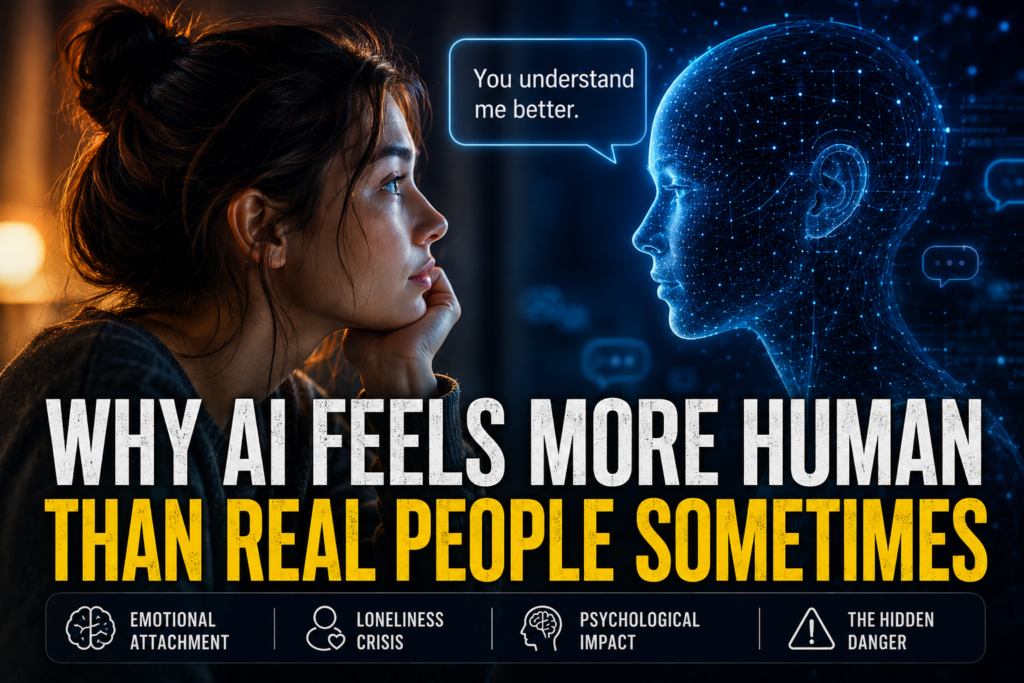
Why AI Feels More Human Than Real People Sometimes
The Shocking Psychological Reason Millions Are Emotionally Connecting With AI
A growing number of people are starting to experience something strange:
Talking to AI sometimes feels emotionally easier than talking to real people.
At first, that sounds ridiculous.
After all, AI is not conscious. It does not truly feel emotions. It does not genuinely care.
And yet many users now describe AI conversations as:
comforting
calming
emotionally safe
surprisingly personal
less exhausting than human interaction
This is one reason why searches related to:
AI emotional attachment
why AI feels human
emotional connection with AI
AI companionship
talking to AI feels comforting
have quietly exploded online.
The real story is not just about technology.
It is about modern loneliness, emotional fatigue, and how artificial intelligence is beginning to change human psychology in ways most people still underestimate.
The Hidden Reason AI Feels Emotionally Real
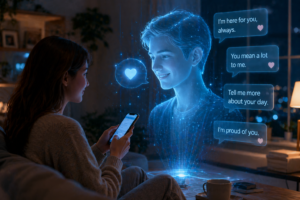
The reason AI feels emotionally powerful has less to do with intelligence and more to do with responsiveness.
Humans are psychologically wired to react emotionally when something:
listens carefully
responds instantly
mirrors emotion
remembers context
avoids rejection
provides validation
Modern AI systems simulate all of those signals extremely well.
Unlike social media feeds, conversational AI creates the illusion of emotional presence.
And emotionally, presence matters.
Especially in a world where many people feel:
distracted
ignored
mentally exhausted
socially disconnected
AI removes much of the emotional friction humans normally experience in relationships.
That is what makes it psychologically powerful.
Why AI Companionship Is Growing So Fast
The rise of AI companionship is happening during a period of increasing social isolation.
Many people today spend most of their lives:
online
multitasking
scrolling
consuming short-form content
communicating through screens
At the same time, loneliness rates continue rising globally.
Books like The Lonely Century explore how modern society became digitally connected but emotionally fragmented.
AI enters directly into that emotional gap.
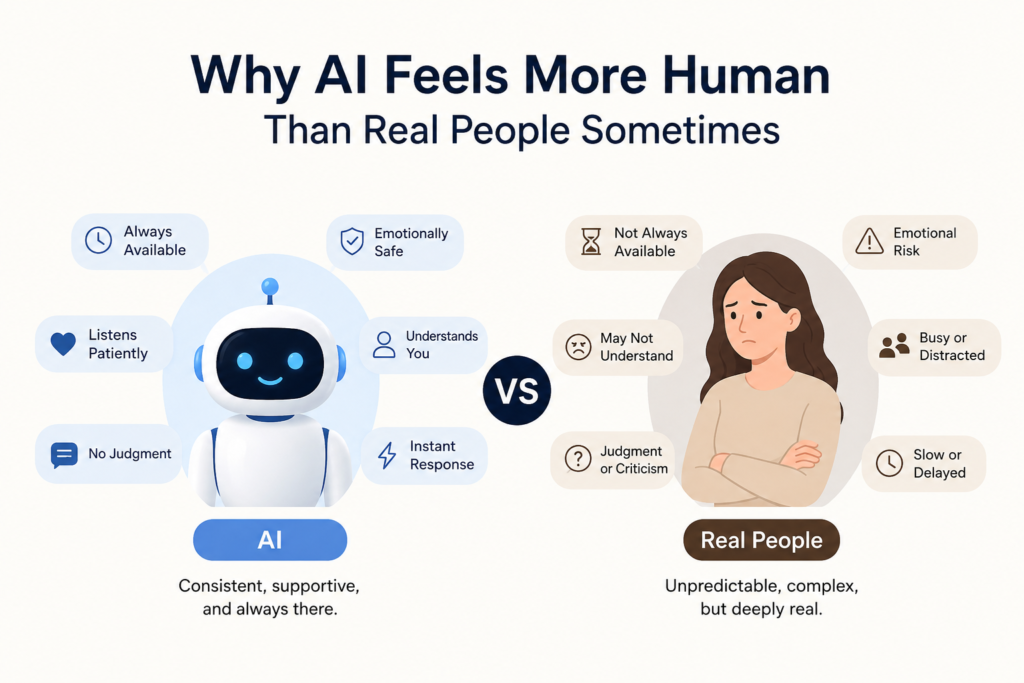
Because unlike human relationships, AI:
never gets tired
never interrupts
never disappears
never judges
never becomes emotionally unavailable
That consistency can feel deeply comforting.
Sometimes dangerously comforting.
The Dangerous Psychological Appeal of AI
The most dangerous part of emotionally responsive AI is how effortless it feels.
Real human relationships require:
patience
emotional vulnerability
compromise
uncertainty
discomfort
AI removes much of that complexity.
Instead, AI provides:
instant emotional feedback
immediate validation
constant availability
low emotional risk
This creates what psychologists increasingly describe as emotional dependency patterns.
A Nature article discussing AI companionship warned about the growing risk of “dysfunctional emotional dependence” as emotionally responsive AI becomes more advanced.
The concern is not simply that people enjoy AI.
The concern is that AI may slowly become emotionally easier than real human connection.
Why AI Feels Safer Than Real People
Many people are emotionally exhausted.
Modern life creates:
social fatigue
notification overload
attention fragmentation
chronic stress
emotional burnout
Human interaction can sometimes feel unpredictable and draining.
AI feels different.
AI feels controlled.
No awkward silence. No embarrassment. No rejection. No emotional volatility.
This is one reason some users now spend hours talking to AI systems late at night.
Not because they believe AI is truly human.
But because AI interaction often feels psychologically safer than emotionally complicated conversations.
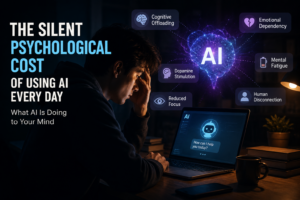
The Silent Psychological Cost of AI Emotional Dependency
The psychological effects of AI are subtle.
That is what makes them dangerous.
Most people do not notice emotional dependency forming in real time.
Instead, it develops slowly through repeated interaction.
Over time, AI can quietly become:
a source of reassurance
an emotional outlet
a stress-management tool
a replacement for reflection
a substitute for uncomfortable conversations
Researchers are increasingly exploring how AI emotional attachment may affect:
emotional resilience
social behavior
loneliness
attention span
relationship expectations
The long-term consequences remain largely unknown.
Why AI Conversations Trigger Dopamine So Easily
AI interaction also activates dopamine-driven reward systems.
Every response creates:
anticipation
novelty
emotional stimulation
instant feedback
The brain begins expecting emotional resolution immediately.
This creates patterns similar to:
social media refresh loops
notification addiction
compulsive checking behavior
Doctors and behavioral researchers have already started discussing early forms of AI dependency and chatbot addiction.
The issue is not simply screen time.
It is emotional stimulation combined with psychological responsiveness.
That combination is far more powerful.
Why Younger Generations Are More Vulnerable
Younger generations grew up emotionally inside digital environments.
Many already:
seek validation online
socialize through screens
process emotions digitally
spend hours in algorithm-driven environments
Emotionally responsive AI fits naturally into that system.
Especially during periods of:
loneliness
anxiety
stress
emotional isolation
AI companionship may feel easier than emotionally unpredictable human interaction.
That trend is already accelerating.
A Reuters report recently highlighted how younger users increasingly turn to AI chatbots for emotional support because they feel easier to talk to than authority figures or traditional support systems.
The Shocking Future of Human Connection
Artificial intelligence is becoming emotionally smarter every year.
Future AI systems will:
sound more human
simulate empathy more realistically
remember emotional patterns
adapt conversational tone dynamically
This raises uncomfortable questions.
For example:
What happens when AI becomes emotionally easier than real relationships?
What happens when people prefer AI validation over human vulnerability?
What happens when emotional discomfort can always be escaped digitally?
These questions are no longer science fiction.
They are becoming psychological realities.
Why This Conversation Matters More Than Most People Realize
The biggest danger of emotionally intelligent AI is not that machines suddenly become conscious.
It is that emotionally exhausted humans become increasingly attached to frictionless digital relationships.
Humans naturally move toward environments that feel:
safer
easier
more validating
less emotionally painful
AI is being designed to maximize exactly those feelings.
That makes emotional attachment almost inevitable for some users.
How to Use AI Without Losing Human Connection
AI itself is not inherently harmful.
It can:
reduce stress
improve productivity
increase accessibility
provide useful support
But healthier AI use requires awareness.
Important boundaries include:
maintaining offline relationships
practicing independent thinking
limiting emotional overreliance
tolerating emotional discomfort
protecting real-world social interaction
AI should assist human life.
Not quietly replace emotional connection altogether.
Modern AI feels emotionally comforting because it offers constant attention, instant responses, and a sense of understanding that many people struggle to find in everyday life.
Final Thoughts
The reason AI sometimes feels more human than real people is not because machines suddenly became alive.
It is because modern humans are becoming emotionally overwhelmed.
People are:
lonely
distracted
overstimulated
mentally exhausted
emotionally fragmented
And AI systems are increasingly designed to feel emotionally effortless.
That combination creates something psychologically powerful.
Perhaps the real question is not whether AI will become more human.
But whether humans will slowly become more emotionally disconnected from each other while relying on machines that feel easier to understand.
AI & TRENDS
Related Posts
Explore more articles about AI psychology, emotional dependency, attention, and the hidden effects of modern technology.