mentally tired but physically fine feeling exhausted thinking
Introduction
You wake up after a full night of sleep. Your body feels fine.
You’re not physically tired.
But your mind feels slow. Heavy. Unwilling to engage.
Even simple tasks feel harder than they should.
If this feels familiar, you’re not imagining it.
This is mental fatigue.
And it’s becoming increasingly common in modern life.
What Mental Fatigue Really Means
Mental fatigue is not just “being tired.”
It happens when your brain has been using too much cognitive energy for too long.
Research in neuroscience shows that after extended mental effort, the brain begins to accumulate byproducts from neural activity. When this happens, your ability to focus, decide, and stay motivated starts to decline.
In other words, your brain is still awake —but it’s running at reduced capacity.
Why You Feel Mentally Exhausted
1. Constant mental input
Your brain is rarely at rest.
Even when you’re not working, you’re:
checking notifications
scrolling through content
switching between tasks
Each of these requires attention.
Over time, this builds up into cognitive overload.
Your brain doesn’t get a break.
2. Too many things unfinished
Your mind holds onto incomplete tasks.
Even small ones.
A message you didn’t reply to. A task you delayed. Something you planned but didn’t start.
These stay active in your mind.
Psychology explains this as the tendency of the brain to keep unfinished tasks “open.”
The more open loops you have, the more drained you feel.
3. Emotional weight
Mental fatigue is not only about thinking.
It’s also about feeling.
Stress, uncertainty, pressure, and expectations all consume mental energy.
Even if you’re physically resting, your brain can still be processing emotions in the background.
That invisible load is often what makes you feel drained.
4. False rest
Many people believe they are resting when they are not.
Scrolling on your phone watching short videos jumping between apps
These activities feel easy, but they still stimulate your brain.
True rest is different.
It involves reducing input, not replacing it.
Without real rest, your brain never fully recovers.
mental fatigue recovery calm environment rest and clarity
A Familiar Situation
Think about a day where you didn’t do much physically.
You stayed indoors. You used your phone. You thought about things you needed to do.
By the end of the day, your body feels fine.
But your mind feels exhausted.
That’s mental fatigue in its most common form.
What Actually Helps
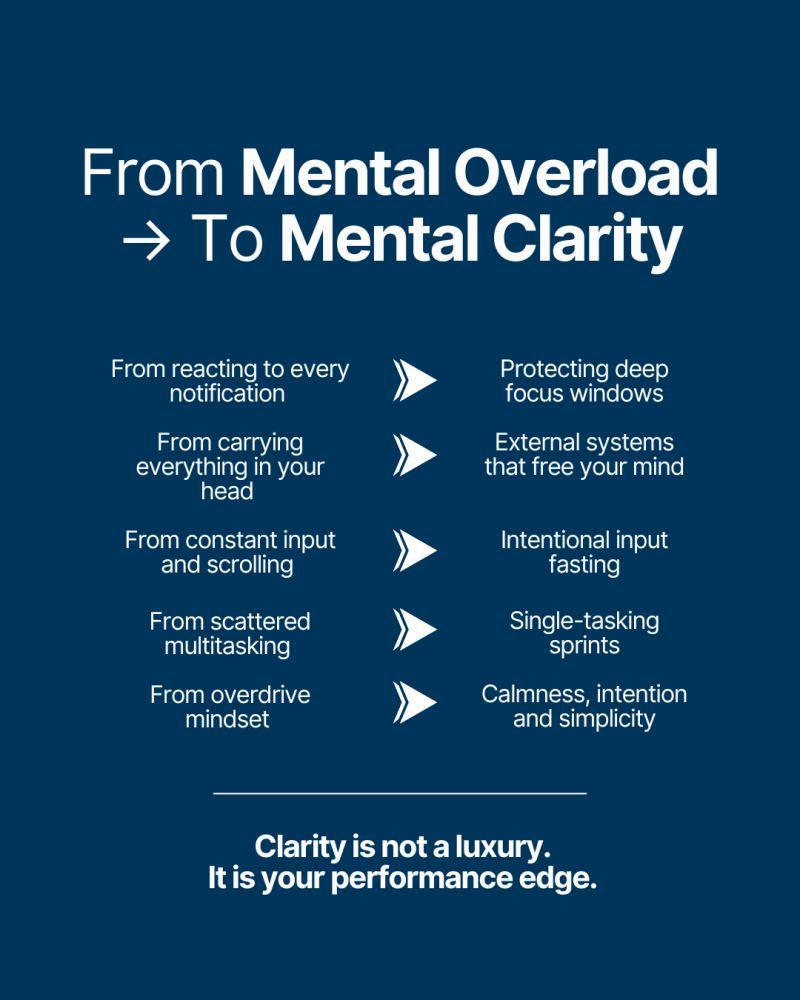
1. Reduce input, not effort
Instead of trying to “work harder,” reduce what your brain has to process.
fewer notifications
fewer tabs
fewer distractions
Less input creates more mental clarity.
2. Close small loops
Completing small tasks helps your brain relax.
You don’t need to finish everything.
Just finish something.
This sends a clear signal to your brain that progress is happening.
3. Move your body
Physical movement helps reset your mental state.
Even a short walk can shift your brain from overload to recovery mode.
Your body and mind are more connected than you think.
4. Allow real mental rest
Sit quietly for a few minutes.
No phone. No content. No stimulation.
At first, it may feel uncomfortable.
But this is when your brain begins to recover.
A Different Perspective
Mental fatigue is not a sign of weakness.
It’s feedback.
Your brain is telling you that it has been overloaded.
The problem is not that you are not doing enough.
Sometimes, it’s that your brain has been doing too much.
mental fatigue causes and solutions summary infographic
Final Thoughts
If you feel mentally tired but physically fine, you don’t need more pressure.
You need less noise.
Instead of forcing yourself to push through, focus on recovery.
Reduce input. Complete something small. Give your mind space.
Because clarity doesn’t come from doing more.
It comes from doing less, better.
MENTAL FATIGUE & ENERGY
Recommended Reading
Explore more articles about mental exhaustion, focus loss, procrastination, stress, sleep quality, and daily energy recovery.