Constantly switching between apps is one of the biggest hidden productivity killers in modern work. Most people don’t realize the problem isn’t effort—it’s the system they use.
Introduction — The Hidden Cost of “Just One More App”
It usually starts with a good intention.
You install a new productivity app. It promises better organization, cleaner workflows, and more focus.
For a few days, it works.
Then something subtle begins to happen.
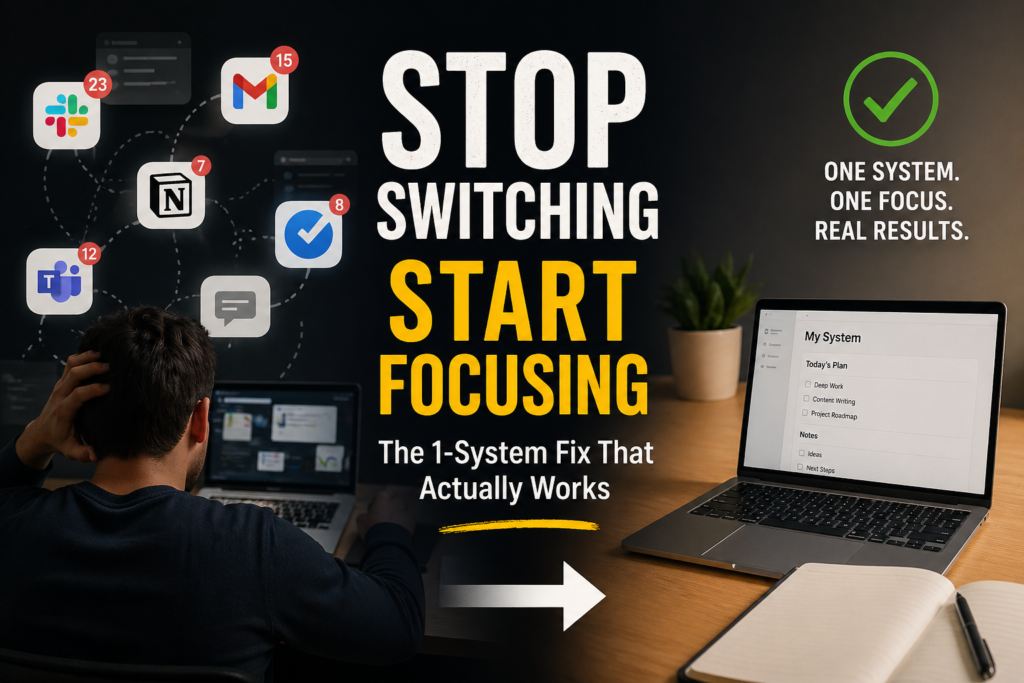
You check Slack. Jump to Notion. Open your email. Go back to Slack.
Nothing feels dramatically wrong—yet your focus is gone.
👉 You’re busy, but not effective.
If that sounds familiar, you’re not alone.
The Problem Most People Don’t See
We tend to believe more tools will make us more productive.
But in reality:
👉 More tools often create more switching. 👉 And more switching destroys focus.
This isn’t just opinion—it’s well documented.
A widely cited study from the University of California, Irvine found that after an interruption, it can take over 20 minutes to fully regain deep focus.
Now think about your typical workflow:
Slack messages
Email notifications
Task manager
AI tools
Documents
👉 You’re not working—you’re constantly restarting your brain.
Why We Keep Switching Anyway
If switching is so damaging, why do we keep doing it?
The answer is not productivity. It’s psychology.
1) The Illusion of Progress
Switching apps feels productive.
You’re moving. Clicking. Responding.
But as productivity researcher Cal Newport has argued, shallow work often disguises itself as meaningful output.
👉 Activity is not the same as progress.
2) Dopamine Loops and Instant Rewards
Every notification, message, or update gives a small reward.
It’s quick. Easy. Satisfying.
Compared to deep work—which is slow and cognitively demanding— your brain naturally prefers switching.
👉 This creates a loop:
distraction → reward → repeat
3) Decision Fatigue
Every time you switch tools, you make a decision:
What should I check next?
What matters most?
Where was I?
Behavioral research shows that repeated decision-making drains mental energy, leading to worse choices over time.
👉 The more you switch, the less clearly you think.
What News and Workplace Data Are Showing
Recent workplace reports reinforce this pattern.
A Microsoft Work Trend analysis found that knowledge workers are interrupted every few minutes on average, largely due to digital communication tools.
Meanwhile, various organizational studies have highlighted how context switching is one of the primary drivers of burnout in modern work environments.
👉 The problem isn’t that tools exist. 👉 It’s that they are not designed as a single system.
The Real Issue — You Don’t Have a System
Most people don’t have a productivity system.
They have:
a collection of apps
a collection of tasks
a collection of habits
👉 But no structure connecting them.
That’s why switching happens.
Not because you lack discipline—
👉 but because your environment forces switching.
The 1-System Fix That Actually Works
This is the part that changed everything for me.
Instead of trying to optimize every tool, I did the opposite:
👉 I reduced everything to one core system
Step 1. Choose One “Home Base”
Pick one primary workspace.
Notion
a simple document
even a physical planner
Everything important lives there.
👉 If it’s not in your system, it doesn’t exist.
Step 2. Separate Communication from Execution
Most switching comes from mixing:
communication (Slack, email)
execution (actual work)
Solution:
👉 Check communication at fixed times 👉 Do work in uninterrupted blocks
Step 3. Pre-Decide Your Workflow
Before you start your day, decide:
what you’ll work on
when you’ll work
where it lives
👉 This removes real-time decisions.
Step 4. Use AI for Planning — Not for Constant Switching
AI tools are powerful—but only if used correctly.
Instead of jumping into AI mid-task:
👉 Use it beforehand
generate task lists
structure your day
clarify priorities
Then execute without interruption.
Step 5. Build Friction Against Switching
Make switching harder, not easier.
close unused tabs
mute notifications
keep only essential tools open
👉 Focus improves when distractions require effort.
What Changed After This
I didn’t become more motivated.
I didn’t find a perfect tool.
But something more important happened:
👉 I stopped switching.
And when switching stopped:
focus increased
work felt lighter
results improved
A Perspective Worth Remembering
Philosopher William James once wrote:
“The art of being wise is the art of knowing what to overlook.”
In today’s world, that applies directly to tools.
👉 Productivity is not about doing more. 👉 It’s about ignoring what doesn’t matter.
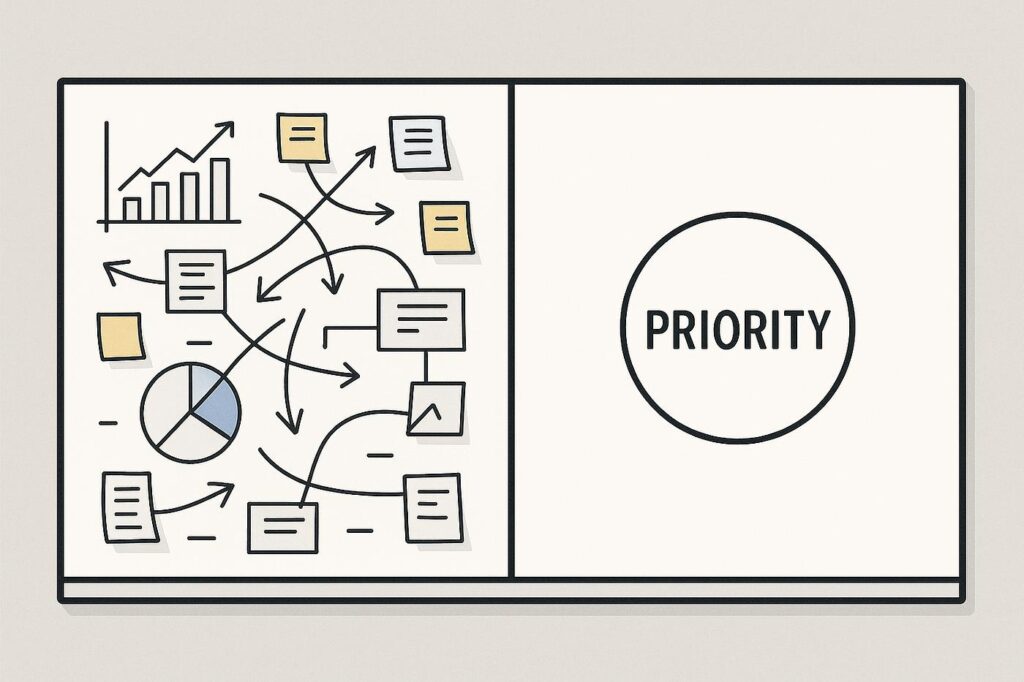
A simple visual summary showing how reducing app switching and using one core system improves focus, productivity, and consistent execution.
Conclusion
If you feel like you can’t focus, the problem is not you.
👉 It’s your system.
More apps won’t fix it. More tools won’t solve it.
Instead:
reduce your tools
structure your workflow
eliminate switching
Because in the end:
👉 Focus doesn’t come from effort. It comes from design.
ATTENTION & DIGITAL DISTRACTION
Recommended Reading
Explore more articles about multitasking, attention residue, app addiction, productivity loss, and how constant digital switching damages focus.