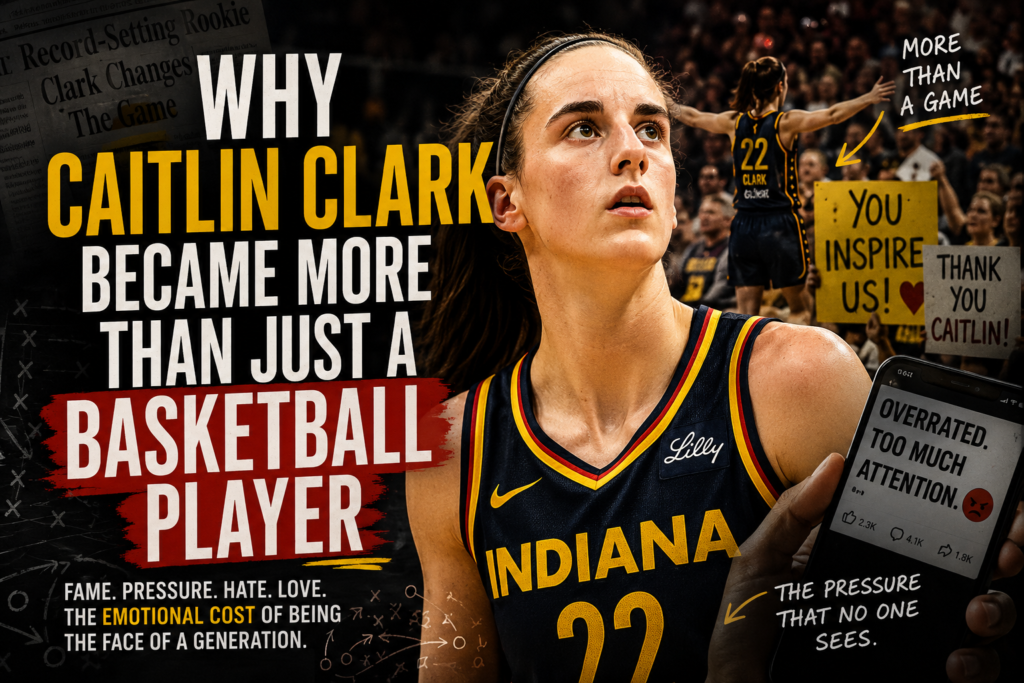
The hidden psychology behind Caitlin Clark’s rise, internet fame, emotional pressure, and modern sports culture.
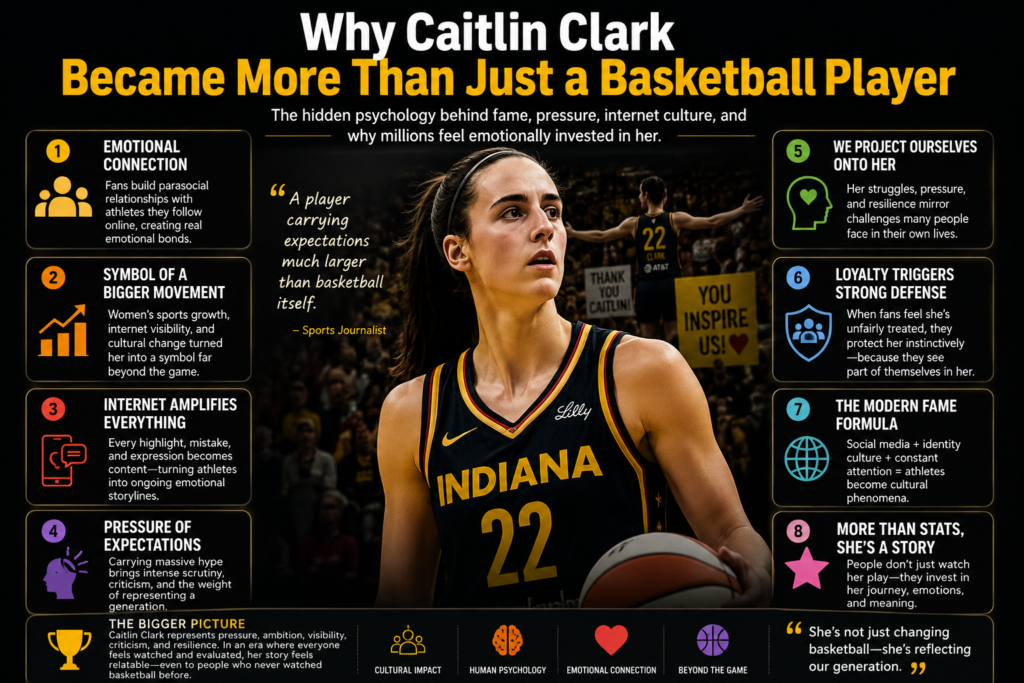
Why Caitlin Clark Became More Than Just a Basketball Player
The Hidden Psychology Behind Fame, Pressure, Internet Culture, and Why Millions Feel Emotionally Invested in Her
At this point, Caitlin Clark is no longer just an athlete.
She has become something much bigger:
a cultural symbol
an internet obsession
a debate about fame
a reflection of modern sports psychology
and for many people, an emotional projection point
That’s why reactions to her feel unusually intense.
People are not just discussing basketball anymore.
They are discussing identity, pressure, gender expectations, internet culture, and what modern fame now feels like in the social media era.
Why Caitlin Clark Triggers Such Strong Emotions Online
One of the most fascinating things about Caitlin Clark is how emotionally invested people become in her story.
Supporters defend her passionately. Critics react intensely. Sports media constantly discusses her. Social media amplifies every moment.
Psychologically, this happens because modern audiences no longer consume sports passively.
They emotionally attach themselves to athletes.
Researchers studying parasocial relationships describe how audiences increasingly feel personal emotional bonds with public figures they repeatedly watch online.
Over time, athletes stop feeling distant.
They start feeling psychologically familiar.
Caitlin Clark Represents More Than Basketball
Part of Caitlin Clark’s rise comes from timing.
Women’s sports were already growing rapidly. Social media accelerated visibility. Streaming culture made highlights instantly viral.
Then Caitlin Clark arrived with:
confidence
range shooting
competitiveness
emotional intensity
visible pressure
polarizing media attention
And suddenly, she became larger than the game itself.
To many fans, she symbolizes:
ambition
pressure
resilience
modern female visibility
internet-era scrutiny
That combination creates emotional attachment far beyond ordinary sports fandom.
Why Modern Audiences Project Themselves Onto Athletes
There’s another psychological layer happening here.
Modern life increasingly feels performative.
People constantly feel watched:
on social media
at work
online
through comparison culture
That’s why audiences strongly relate to public figures carrying visible pressure.
Watching Caitlin Clark navigate criticism, expectations, and nonstop attention feels emotionally relatable to many people — even outside sports.
The athlete becomes symbolic.
The Internet Turns Athletes Into Emotional Narratives
A generation ago, athletes mainly existed during games and interviews.
Now they exist continuously.
Every reaction becomes content. Every expression becomes debate. Every bad game becomes discourse.
The internet transforms athletes into ongoing emotional storylines.
That’s why Caitlin Clark discussions often become less about basketball statistics and more about:
personality
media treatment
pressure
fairness
identity
emotion
In many ways, people are reacting to what she represents emotionally — not only what she does on the court.
Why People Defend Caitlin Clark So Passionately
Behavioral psychologists often note that humans instinctively defend figures they emotionally identify with.
That emotional identification becomes stronger when audiences perceive:
unfair criticism
excessive pressure
unrealistic expectations
online hostility
Many fans subconsciously see parts of themselves in Caitlin Clark:
pressure to perform
fear of failure
public judgment
burnout
competition
That emotional projection creates unusually intense loyalty.
The Pressure of Being “The Face” of Something
One sports journalist recently described Caitlin Clark as:
“A player carrying expectations much larger than basketball itself.”
That line feels accurate.
Because being the face of a movement creates enormous psychological pressure.
Modern culture increasingly turns public figures into symbols:
of generations
industries
identities
political conversations
cultural debates
And once that happens, every action becomes emotionally magnified.
Why Women’s Sports Feel Different Right Now
The rise of Caitlin Clark also reflects something larger happening culturally.
Women’s sports are no longer treated as niche entertainment.
Audience growth, media attention, and social engagement have changed dramatically over the past few years.
But increased visibility also creates:
higher scrutiny
internet polarization
nonstop commentary
emotional tribalism
That environment intensifies every storyline surrounding major athletes.
Especially athletes who become symbolic of broader cultural shifts.
My Own Experience Watching the Caitlin Clark Phenomenon
A few months ago, I noticed something interesting while scrolling online after a game.
People weren’t only discussing shots or stats.
They were arguing emotionally.
Some defended her intensely. Others criticized her aggressively. Some talked about pressure. Others talked about media narratives.
And that’s when I realized: This was no longer normal sports discussion.
It felt closer to internet-era identity culture.
People were emotionally investing parts of themselves into the conversation.
Why This Will Probably Continue
As social media, algorithm-driven attention, and personality-based fandom continue growing, athletes like Caitlin Clark will increasingly become emotional symbols — not just competitors.
Modern audiences don’t simply watch sports anymore.
They attach meaning to people.
That’s why conversations around athletes now often reveal more about society itself than about the actual game.
Why Caitlin Clark became more than just a basketball player — the hidden psychology behind fame, pressure, internet culture, and emotional connection in modern sports.
Final Thoughts
Caitlin Clark became more than a basketball player because modern culture no longer separates sports from emotion, identity, and internet psychology.
She represents:
pressure
ambition
visibility
criticism
resilience
modern fame
And in an era where millions of people feel constantly evaluated and emotionally exposed online, that kind of public pressure feels strangely relatable.
Maybe that’s why so many people feel emotionally connected to her story.
Even if they were never basketball fans before.
Read Next: Related Articles on Solveyourday
Caitlin Clark’s rise is not just a sports story. These related articles explain the psychology behind modern fame, emotional pressure, online attention, and why people become deeply attached to public figures.