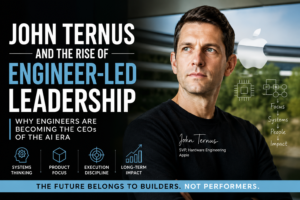
John Ternus Apple CEO leadership style is built on consistency, execution, and long-term thinking.
Introduction
In the world of tech leadership, attention usually goes to the loudest voices—founders, visionaries, or public-facing CEOs.
John Ternus doesn’t fit that pattern.
He didn’t build a personal brand. He didn’t dominate headlines. He didn’t rush to the spotlight.
Yet after more than two decades inside Apple, he rose to become one of the most important leaders in the company.
That raises a more interesting question than “Who is John Ternus?”
👉 What does his career reveal about how real success is built?
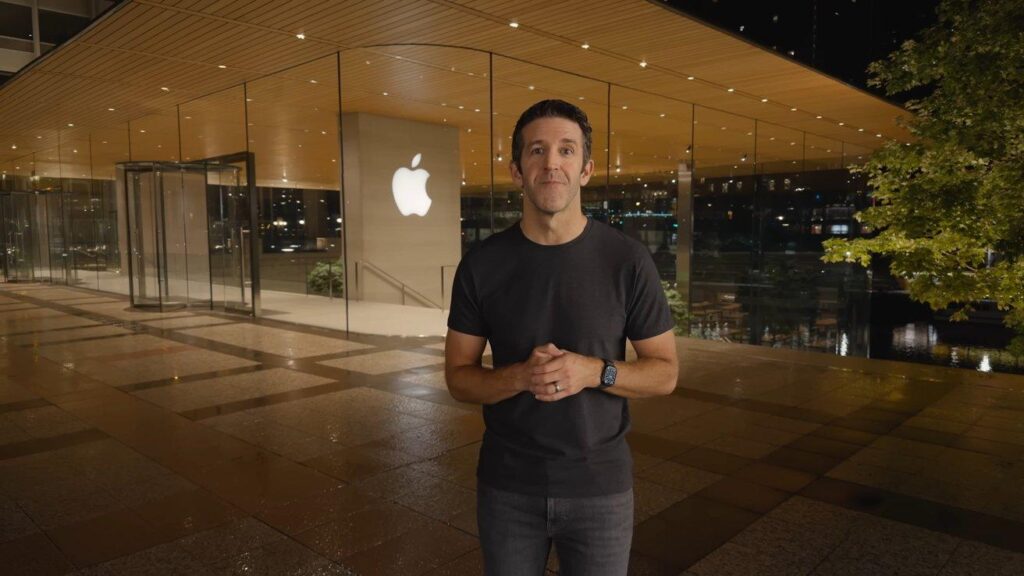
John Ternus, Apple’s Senior Vice President of Hardware Engineering, known for his execution-focused leadership style.
Who Is John Ternus? (A Brief but Important Background)
John Ternus joined Apple in 2001 as a mechanical engineer. Over time, he became deeply involved in the development of core Apple products—iPhone, iPad, Mac, and Apple Silicon.
In 2021, he was appointed Senior Vice President of Hardware Engineering, taking over a role previously held by Dan Riccio. From that point forward, he became one of the central figures shaping Apple’s hardware strategy.
What makes his story different is not just the position—but the path:
No rapid promotions
No public persona
No shortcuts
👉 Just consistent execution over time.
Why His Rise Matters Now
Apple’s leadership evolution is happening in a challenging moment:
AI competition is accelerating
Hardware innovation must continue
Market expectations are higher than ever
In this context, leadership is no longer just about vision. It’s about reliability under pressure.
Ternus represents a shift:
👉 from charismatic leadership → to execution-based leadership
A Core Principle: “Build What Actually Works”
One of the most telling insights about Ternus comes from internal Apple discussions often referenced in tech reporting:
👉 Apple does not ship technology simply because it exists. 👉 It ships technology when it improves real user experience.
This principle sounds simple—but it is rare.
In an industry driven by trends, speed, and hype:
many companies launch features quickly
then fix problems later
Apple, under leaders like Ternus, tends to:
move slower
validate deeper
deliver more consistently
👉 That is not caution. 👉 That is discipline.
A Lesser-Known Detail That Explains Everything
Before his rise at Apple, Ternus worked on early engineering projects focused on real-world usability—including assistive devices.
That early exposure shaped a mindset:
👉 technology is not impressive unless it solves something real
This shows up later in Apple’s product philosophy:
hardware and software integration
simplicity over feature overload
long-term reliability over short-term excitement
Leadership Lesson 1: Consistency Compounds More Than Talent
Ternus spent over 20 years at Apple before reaching the top level of leadership.
No breakthrough moment. No viral success story.
Just repetition.
This aligns with a principle often discussed in performance psychology:
👉 small, consistent actions outperform irregular bursts of effort
Most people overestimate what they can do in a week and underestimate what they can build in ten years.
Ternus is a clear example of the latter.
Leadership Lesson 2: Execution Is the Real Differentiator
In business conversations, vision is often overvalued.
But execution determines outcomes.
Ternus’s career reflects a simple truth:
ideas are common
execution is rare
He wasn’t known for making bold predictions. He was known for delivering working products at scale.
That difference matters more than most people realize.
Leadership Lesson 3: Focus Is a Strategic Advantage
Apple’s success has often been tied to what it chooses not to build.
This is where Ternus’s influence becomes important.