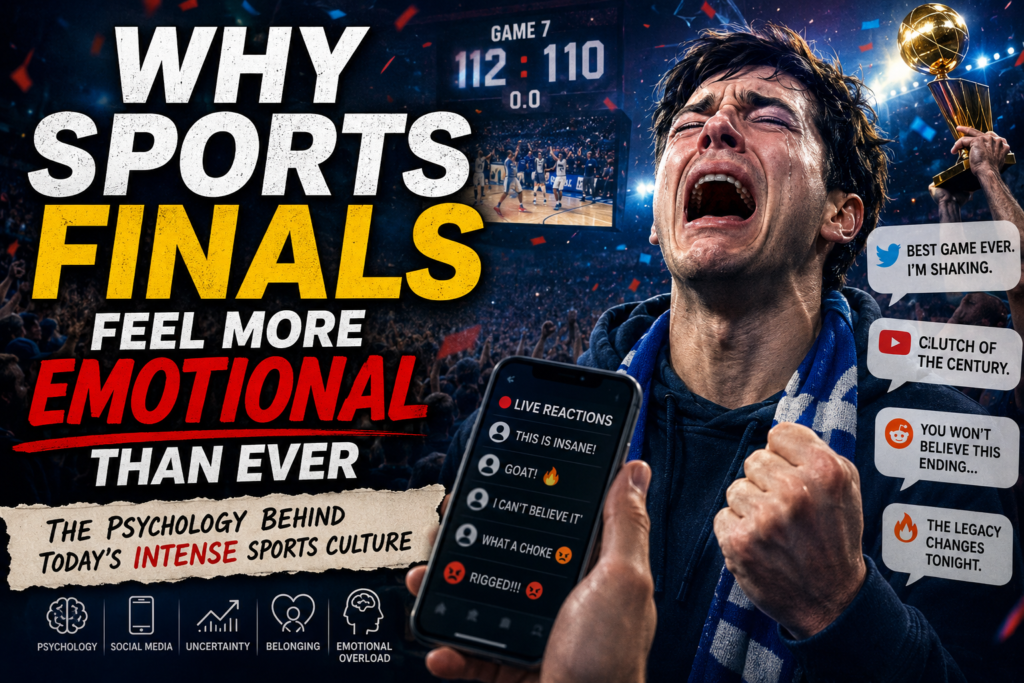
Modern sports finals have become emotionally overwhelming experiences driven by social media reactions, nonstop highlights, betting culture, and digital overstimulation. Fans today are no longer just watching games — they are emotionally living inside them.
Why Sports Finals Feel More Emotional Than Ever
A few nights ago, I watched the final minutes of a playoff game while scrolling through Twitter at the same time.
The game itself was intense. But honestly, what overwhelmed me wasn’t just the score.
It was everything surrounding it.
Fans screaming online. People posting crying videos. Legacy debates exploding instantly. Commentators acting emotionally drained. Friends sending voice messages like something historic had just happened.
At one point, I realized I was gripping my phone tighter than I used to during actual personal stress.
And that thought stayed with me afterward.
Because lately, sports finals don’t just feel entertaining anymore.
They feel emotionally consuming.
Whether it’s the NBA Finals, World Cup matches, Super Bowl moments, or viral playoff games, modern sports somehow feel psychologically heavier than they used to.
And according to psychologists, neuroscientists, and media researchers, there are real reasons for that.
Why Sports Feel More Emotional Today
Sports have always triggered strong feelings.
That part isn’t new.
But the emotional intensity surrounding modern sports has clearly changed.
Researchers from Harvard University studying collective identity found that humans naturally attach emotional meaning to groups, rituals, and shared experiences.
In uncertain times, this emotional attachment becomes even stronger.
That matters because modern life increasingly feels fragmented:
remote work
loneliness
AI anxiety
economic uncertainty
nonstop digital comparison
information overload
People crave emotional belonging more than ever.
Sports provide it instantly.
For a few hours, millions of strangers suddenly care about the exact same thing together.
That feeling is powerful.
And honestly, maybe even addictive.
Sports No Longer End When The Game Ends
This may be the biggest reason modern sports feel emotionally exhausting.
Twenty years ago, games mostly existed during the game itself.
Now the emotional cycle never stops.
Before the finals:
prediction videos
betting discussions
hot takes
viral arguments
endless rankings
During the game:
live memes
second-screen scrolling
Twitter outrage
reaction videos
instant debates
After the game:
legacy arguments
emotional clips
fan wars
sports podcasts
TikTok analysis
The game became content.
And content never sleeps.
I Started Noticing Something Strange About Myself
Last year during a major playoff series, I checked social media reactions almost more than I watched the actual game.
At halftime, I had:
Reddit open
Twitter open
YouTube clips playing
group chats buzzing
My attention kept splitting in every direction.
And afterward, I felt weirdly exhausted.
Not physically. Mentally.
That surprised me because sports used to help me relax.
Now major sports events sometimes feel closer to doomscrolling than entertainment.
I don’t think I’m the only one feeling that shift.
Why The Brain Gets So Emotionally Invested In Sports
In The Social Animal, psychologist Elliot Aronson explained that humans derive emotional identity and self-esteem from group belonging.
Sports teams become emotional extensions of identity.
That’s why:
wins feel personal
losses ruin moods
criticism feels offensive
rivalries feel emotional
Neurological studies have even shown that highly invested sports fans experience stress responses similar to real-life personal conflict during high-stakes games.
To the brain:
“my team lost” can partially feel like: “something important to me failed.”
That emotional wiring becomes dramatically stronger online because social media amplifies identity constantly.
Social Media Quietly Changed Sports Forever
Modern sports are no longer just sports.
They’re algorithmic emotional ecosystems.
Platforms reward:
outrage
emotional reactions
controversy
tribal conflict
dramatic narratives
Calm analysis rarely trends.
Emotion does.
That’s why every finals game now feels culturally massive.
Even small moments instantly become:
viral debates
morality discussions
“GOAT” arguments
identity wars
And honestly? The nonstop emotional stimulation becomes exhausting after a while.
Especially when millions of people are reacting simultaneously in real time.
Sports Betting Made Everything More Intense
Another major shift is sports gambling culture.
For many people now, games no longer represent simple entertainment.
They represent:
money
anxiety
emotional swings
risk
fear of losing
Betting apps constantly push:
live odds
instant alerts
prop bets
“same game parlays”
real-time reactions
That changes the emotional experience completely.
Every possession suddenly feels financially loaded.
And younger audiences are growing up inside this hyperstimulated environment from the beginning.
Why Sports Feel Bigger During Uncertain Times
There’s another psychological layer here people rarely talk about.
Sports become emotionally stronger when everyday life feels unstable.
Economic pressure. AI replacing jobs. Rising living costs. Burnout. Digital fatigue. Political division.
When life feels emotionally fragmented, collective experiences become more psychologically meaningful.
Researchers studying collective rituals found that synchronized emotional experiences temporarily reduce feelings of uncertainty and isolation.
Sports finals now function almost like modern rituals.
Millions celebrate together. Millions panic together. Millions suffer together.
That emotional synchronization feels deeply human in an era where many people increasingly feel disconnected offline.
Even Athletes Are Emotionally Overloaded Now
Modern athletes don’t just compete in games anymore.
They compete inside:
meme culture
nonstop commentary
viral criticism
reaction culture
24/7 media pressure
One bad performance can dominate social media for days.
Former NBA players and sports psychologists have openly discussed how modern online environments dramatically increase emotional pressure for athletes.
Because now the internet never lets emotional moments disappear.
Everything becomes permanent content.
The Hidden Cost Of Sports Overstimulation
The strange thing is that sports are supposed to reduce stress.
But modern sports media often creates the opposite effect.
Many fans now experience:
emotional burnout
attention fragmentation
overstimulation
compulsive scrolling
post-game mental exhaustion
I noticed this after one recent finals game.
Even after the game ended, I kept consuming reactions for almost two hours:
podcasts
fan debates
replay clips
Twitter arguments
At some point, I realized I wasn’t even enjoying it anymore.
I was emotionally stuck inside the event.
That feeling seems increasingly common now.
Why People Still Love Sports Anyway
Because despite everything, sports still create something incredibly rare:
Collective emotion.
Author Yuval Noah Harari once wrote that humans build meaning through shared stories and collective belief systems.
Sports may now be one of the last major experiences where millions of people feel emotionally synchronized at the same time.
That feeling matters.
Especially in an internet era filled with:
isolation
fragmented attention
personalized algorithms
loneliness
digital exhaustion
Sports temporarily reconnect people emotionally.
And maybe that’s why the feelings became so intense.
Not because the games changed.
Because society did.
Modern sports finals are no longer just games. Social media, betting culture, emotional tribalism, and nonstop digital reactions have transformed sports into emotionally overwhelming experiences that deeply affect attention, stress, and mental energy.Sports finals feel more emotional than ever because modern fans experience games through constant social media reactions, emotional overload, and digital stimulation. In today’s attention economy, sports have become immersive emotional events rather than simple entertainment.
Final Thoughts
Sports finals feel more emotional than ever because modern life itself feels emotionally overloaded.
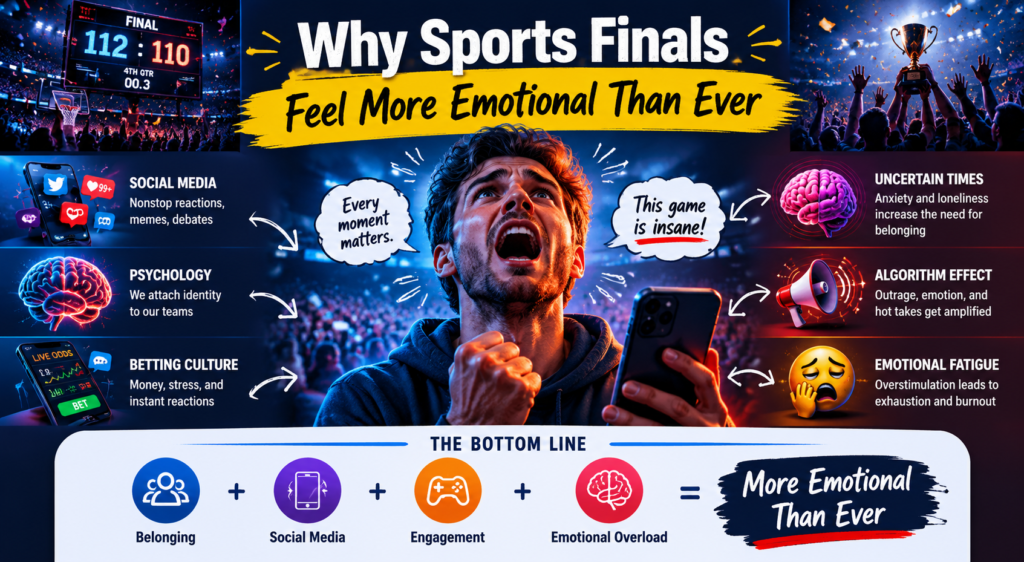
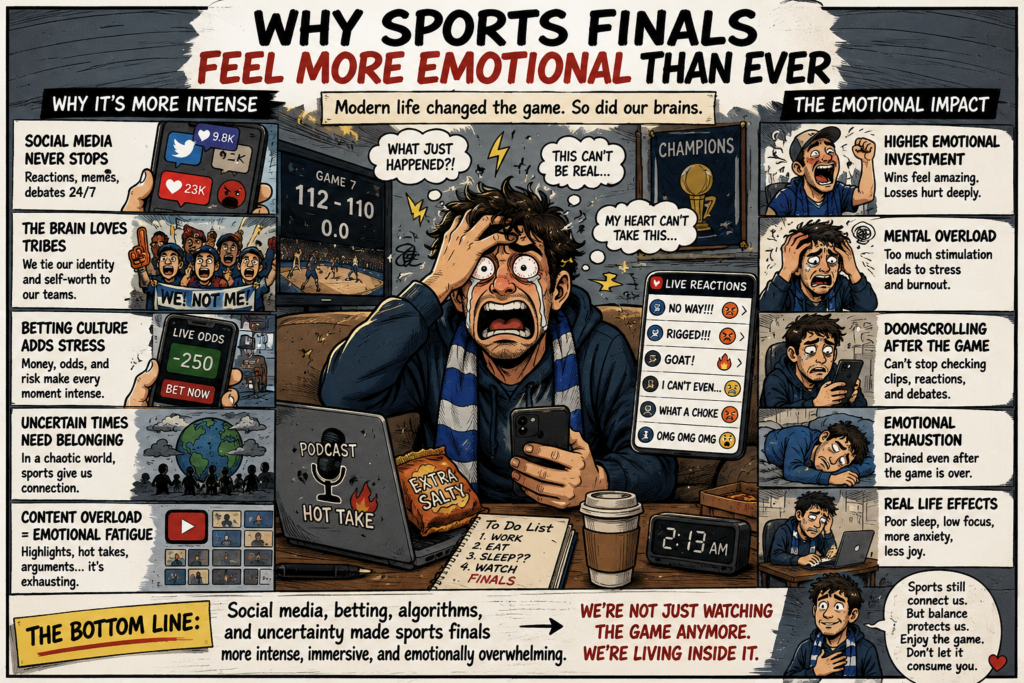
Social media amplified reactions. Algorithms amplified outrage. Betting amplified stress. And uncertainty amplified people’s need for belonging.
The result is a sports culture that feels:
louder
faster
more immersive
more exhausting than it did even a decade ago.
And honestly?
That’s probably why people keep coming back.
Not just for the score.
But for the feeling of experiencing something together in a world that increasingly feels emotionally disconnected.
Related Reading: Sports, Emotion, and Digital Overload
If major sports finals feel more intense than before, these related articles will help you understand how social media, attention, emotion, and digital overload shape the modern brain.
For readers who want to explore the psychology behind sports fandom, collective emotion, and media-driven overstimulation, these sources provide useful background.